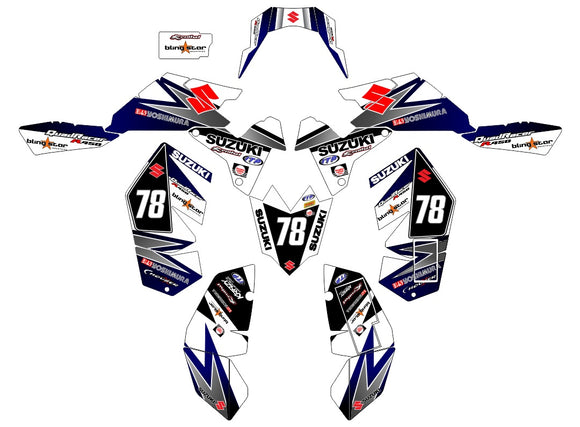
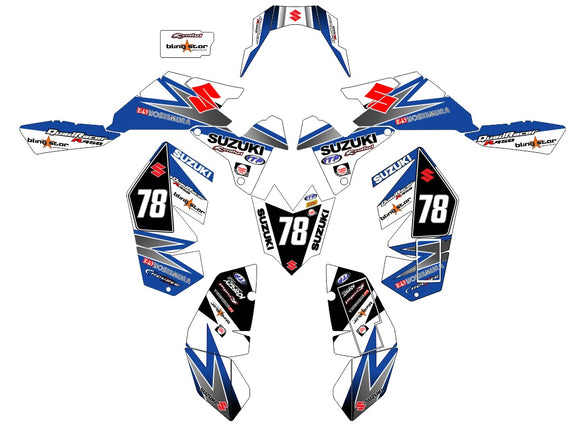
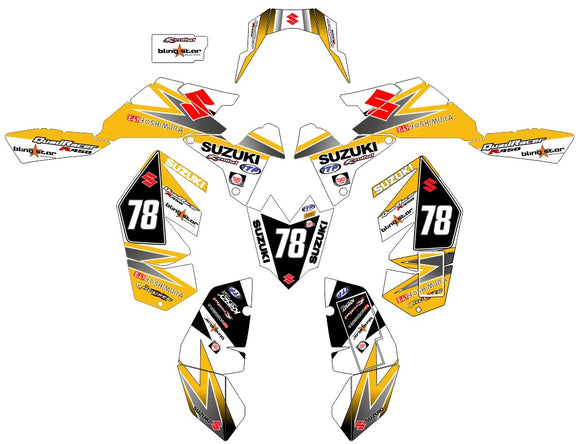
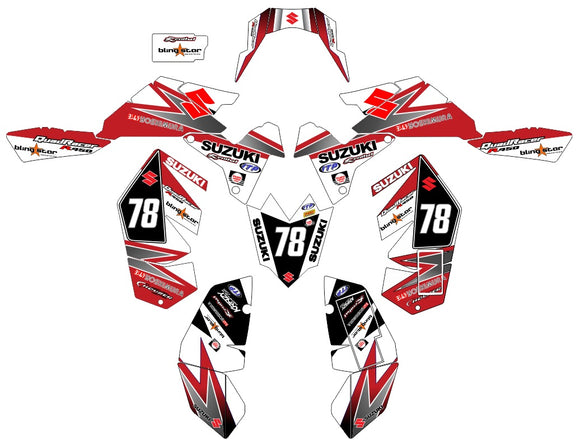
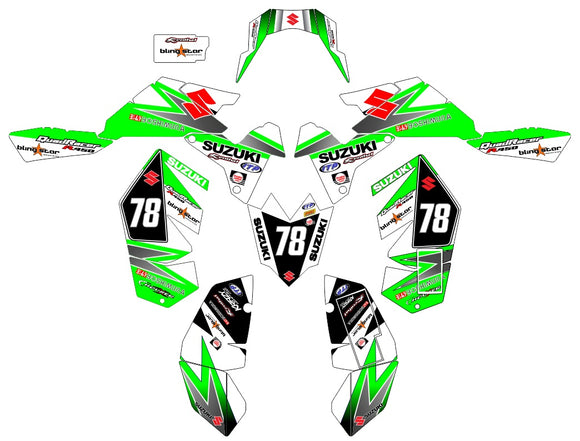
Suzuki LTR450 Graphics & Wrap Kits
Suzuki LTR-450
Custom graphics for the Suzuki LTR-450 Quadracer — designed for the platform Suzuki built to chase championships, and the riders who still treat it that way.
Built For The Quadracer
Designed around the LTR-450 plastic profile — fenders, side panels, and tank shrouds.
Premium vinyl, built to hold up to real riding conditions.
Your colors, numbers, name, and sponsors. Designed to your spec.
The Briefing — Full Detail
The LTR-450 Story
The Suzuki LTR-450 is one of the most respected sport quads ever produced. Built specifically as a race-ready 450 to challenge Yamaha and Honda in the AMA ATV Pro Motocross series, the LTR-450 — also known as the Quadracer — was Suzuki's full-commitment entry into the modern 450 sport class. Aluminum twin-spar frame, fuel-injected 449cc engine, full sport geometry, and race-bred suspension put the LTR-450 directly in conversation with the YFZ450R and TRX450R from day one. Even after Suzuki ended LTR-450 production, the platform held its place as one of the strongest sport-quad chassis on the trail and the track.
What made the LTR-450 stand out wasn't just the spec sheet. It was the commitment. Suzuki didn't ease into the 450 sport class — they came in with a purpose-built race chassis that took everything they'd learned from the RM-Z motocross program and applied it to a quad. That commitment showed in how the bike rode, how it handled, and how it photographed. The Quadracer name wasn't marketing. It was a statement about what the machine was actually built for.
That race pedigree is exactly why custom Suzuki LTR-450 graphics matter so much. The Quadracer wasn't designed as a casual recreational quad — it was built to compete. Riders who own LTR-450s tend to take them seriously, whether they're running in a regional motocross series, hitting the dunes, ripping trails, or restoring an original to better-than-stock condition. A graphics kit that respects that race heritage is part of what makes the build feel right.
Why Custom Graphics On The LTR-450
The factory LTR-450 graphics package was bold for its time, but for owners who've kept these quads in their stables for years, the original decals are usually long gone. Sun fade, mud, water, and the constant abuse of real riding strip stock graphics down fast. A custom graphics kit takes a tired-looking LTR-450 and puts it back into the conversation visually. The plastics get sharper. The presence comes back. The build reads as serious again — the way it did when it rolled off the showroom floor, only better, because the design is the rider's.
Beyond restoration, custom graphics let LTR-450 owners shape the build's identity in ways the factory livery never could. The original Suzuki yellow-and-blue color scheme is iconic, and plenty of riders want to honor it — but custom graphics let the rider extend that factory feel, modernize it, or completely rebuild the visual identity in a different direction. Black-and-yellow stealth schemes. Race-team replicas. Personal color palettes built around team colors, regional identifiers, or sponsor logos. The decision belongs to the rider.
Race Roots Matter
The LTR-450 was developed during a high point in factory ATV racing. Suzuki put serious R&D into making it competitive at the pro level, and that engineering DNA shows up in every part of the chassis — the way the frame distributes load, the way the suspension responds, the way the engine builds power into the corners. For riders who actually race their LTR-450s, the graphics package isn't just decoration. It's part of how the machine reads to other competitors, race officials, photographers, and the broader scene. A serious race quad with weak graphics undersells the program. A serious race quad with a custom kit looks dialed in from every angle.
Even for non-racing LTR-450 owners, that race association carries weight. The Quadracer name means something. The yellow-and-blue factory colors mean something. A custom graphics kit lets the rider participate in that history while still making the machine personal. It's the upgrade that bridges race-shop seriousness and individual ownership — and on a platform like the LTR-450, that bridge matters more than it does on a generic utility quad.
The LTR-450 Plastics
The LTR-450 has its own distinct plastic profile. The front fenders flare with a specific contour. The tank shrouds carry the tank and radiator covers in a single integrated panel. The side number plates are positioned for traditional motocross-style number display. The rear fenders are shaped for the seat-and-tank line that defines the Quadracer's silhouette. A model-specific graphics kit is cut around all of those exact panels, which means the design lays flat, follows the lines of the bodywork, and finishes cleanly at every edge.
Generic kits don't account for any of that. A multi-fit ATV decal pack ignores the LTR-450's specific contours and tries to use one template across multiple machines. The result is graphics that don't sit right, don't follow the bodywork, and don't read as a finished kit. A real LTR-450 graphics kit is cut for the LTR-450 — nothing else. That fitment difference is one of the main reasons riders search specifically for Suzuki LTR-450 graphics, LTR-450 decal kits, Quadracer wraps, and LTR-450 custom plastics graphics rather than generic ATV stickers.
Mud, Sand, Track, And Trail
LTR-450s end up in every kind of riding environment. Track-day quads see hard motocross use with constant impacts, jumps, and pressure-washing between sessions. Trail builds run through woods, water, and rocks where the bodywork takes a different kind of abuse. Sand quads at the dunes deal with constant sand abrasion that wears on plastics differently than trail conditions. Mud builds get water and silt pushed into every crease of the panels. A graphics kit on an LTR-450 needs to handle all of those conditions, depending on how the rider uses the machine.
That demand for durability is part of why a serious LTR-450 graphics kit isn't a hobby sticker pack. It's a real wrap kit designed to survive how these machines get used. That's the difference between a kit that lasts through a season of real riding and a kit that fails after the first hard ride.
The Factory Yellow And Blue
The Suzuki factory yellow-and-blue color scheme is one of the most recognizable liveries in powersports. From GSX-R sportbikes to RM-Z motocross machines to the LTR-450 itself, the color combination has carried Suzuki racing identity for decades. For LTR-450 owners, that color heritage is part of what makes the platform feel special. A custom graphics kit can either lean into that heritage or move away from it, depending on the rider's direction.
Riders who want to honor the factory roots can build a kit around the original yellow and blue, modernized with sharper layouts and updated typography. Riders who want a complete reset can choose any color palette they want — the LTR-450 carries strong color in any direction. Black-and-red. White-and-orange. All-black stealth. Custom team colors. The bodywork is strong enough to support any of those choices because the chassis underneath is already sharp enough to make any color scheme look like a finished build.
Refresh, Restore, Or Rebuild
Most LTR-450s in the wild today have been ridden hard for years. The original factory graphics on these quads are almost always faded, peeling, or completely gone. A custom graphics kit is the fastest way to refresh that visual side without spending money on new plastics or paint. The bodywork stays original. The kit goes on. The machine looks finished again. That's the cycle — and on a platform that's been out of production for years, the cycle keeps repeating because owners keep these quads alive long after Suzuki stopped building them.
For LTR-450 restoration projects, a custom graphics kit is one of the final pieces. Engine work, suspension refresh, plastics replacement, and the rest of the rebuild get a lot of attention — but without finishing graphics, the project never really feels done. A kit built specifically for the LTR-450 is what completes the restoration and turns a long project into a finished machine.
Number Plates And Personalization
The LTR-450's race-bred design includes proper side number plate locations — a feature that's part of why this platform fits motocross-style graphics so naturally. A custom kit can include race numbers in the correct sizing for the rider's class, sponsor logos in proper positions, and the rider's name or call sign integrated into the layout. For racers, that personalization matters competitively and visually. For non-racers, those same elements turn the quad into a clearly personal machine that nobody else has.
That personalization is one of the big reasons custom LTR-450 graphics matter more than generic decals. A name on the rear fender. A number on the side plate. A nickname tucked into the design. Those details turn a quad into someone's quad — and on a platform with the LTR-450's race heritage, those details fit naturally because the bodywork was designed for them in the first place.
What Makes A Real LTR-450 Kit
A real Suzuki LTR-450 graphics kit shares a few specific qualities. Real model-specific cutting around the LTR-450's exact plastic profile rather than a multi-fit template. Premium 21 mil vinyl that holds up to real riding rather than budget material that fails inside a season. Full customization options that put color, layout, and personalization in the rider's hands rather than offering a fixed pattern with a name slot. And design quality that respects the platform — sharp typography, clean layouts, and color choices that work on the LTR-450's specific bodywork.
Those qualities are what separate a serious graphics kit from a disposable sticker pack. The price difference is real, but the value difference is bigger. A premium LTR-450 kit looks better on day one, lasts longer through the riding season, and represents the platform the way the platform deserves to be represented. For a machine with the Quadracer's race heritage, that's the right level of upgrade.
The LTR-450 Community
One thing that separates the LTR-450 from a lot of other sport quads is the community around it. Owners of these machines tend to be active in forums, social groups, ride days, and motocross meets where the Quadracer still gets respect. Because Suzuki stopped producing the LTR-450, every machine still on the trail or the track represents an owner who chose to keep it alive — and that creates a tighter community than you find around quads that are still rolling off the showroom floor. People notice each other's LTR-450 builds in a way they don't notice random utility quads.
That community visibility makes graphics matter more on this platform. A finished LTR-450 with custom graphics fits into that community as a serious build. A faded, tired-looking LTR-450 with peeling factory decals reads as a project that hasn't been finished yet. The same chassis can tell either story, and the graphics package is what controls which one. For owners who actively participate in the LTR-450 scene, a custom graphics kit becomes part of how the build communicates to everyone else who rides one.
Why The LTR-450 Still Matters
Suzuki ended LTR-450 production years ago, but the platform's relevance hasn't faded. Owners who held onto their Quadracers ended up with one of the strongest 450 sport-quad chassis ever produced, and the aftermarket scene around the LTR-450 has stayed active because of that. Replacement plastics, suspension components, engine parts, and graphics kits are all still being made and sold for this platform — not because Suzuki is keeping it alive, but because owners are. That kind of community-driven longevity is rare, and it's part of what makes the LTR-450 special.
A custom graphics kit fits naturally into that picture. When a rider invests in an LTR-450 in 2024 or 2025, they're choosing to keep a discontinued platform on the trail or the track. The graphics package is part of how that commitment shows. A finished LTR-450 with a fresh custom kit is a statement that this platform still belongs in the conversation — and on a chassis with the Quadracer's race history, that statement lands harder than it would on almost any other quad.
Photography And Build Documentation
Modern LTR-450 builds get documented in ways the original Quadracer racers never had to think about. Phones, social feeds, group chats, forum posts, and YouTube clips all become part of how the build presents itself. The plastics are the largest visible surface in every one of those frames, and graphics are what control the read. A great LTR-450 build with weak graphics photographs like a tired old quad. The same build with a strong custom kit photographs like a serious machine that someone clearly cares about.
That photography role matters because the build's online identity becomes its reputation over time. Riders who post their LTR-450s end up creating a record of the build, and that record is heavily influenced by how the graphics read in photos. Strong contrast, sharp layouts, and clean color choices all hold up across the full range of conditions where these quads get photographed — bright sun at the dunes, overcast garage shoots, mud at the trailhead, dust on the trailer.
Why Buyers Search Specifically For LTR-450 Kits
Riders looking for LTR-450 graphics search with specific intent. Phrases like Suzuki LTR-450 graphics kit, LTR-450 decal kit, Quadracer custom graphics, Suzuki sport quad wrap, and LTR-450 motocross graphics all show up in real search behavior. Those searches reflect riders who already know what platform they own and are looking for something built specifically for it. That intent matters because it tells the difference between a casual shopper and a serious buyer. Casual shoppers search for "ATV stickers." Serious LTR-450 owners search for LTR-450 graphics. The kits worth ordering are built for the second group.
That focused buyer intent also explains why generic kits don't satisfy LTR-450 owners. A rider who specifically searches for Quadracer graphics already has standards in mind. They want a kit that knows what an LTR-450 looks like, what the plastics do, what the platform represents, and how the design should land on the machine. A real LTR-450 graphics kit meets all of those expectations because it's built specifically for that buyer.
The Bottom Line
The Suzuki LTR-450 is one of the most serious sport quads ever produced. Owners of these machines tend to keep them, ride them hard, and care about how the build presents itself. A custom Suzuki LTR-450 graphics kit is the upgrade that pulls every other part of the build into focus — the engine work, the suspension setup, the wheels, the seat, all of it reads better with finished graphics than without. Whether the goal is to refresh a tired Quadracer, restore an original, finish a race build, or just give the platform the visual treatment it deserves, the right kit is what makes the machine feel done.
The Quadracer earned its reputation the hard way, on tracks and trails where it had to compete against the strongest 450s in the class. Owners who keep these machines running are part of that legacy, and a custom graphics kit is one of the most direct ways a rider can put their own mark on a chassis with that kind of history. The LTR-450 already has the bones. The right graphics kit is what makes the rest of the build match.