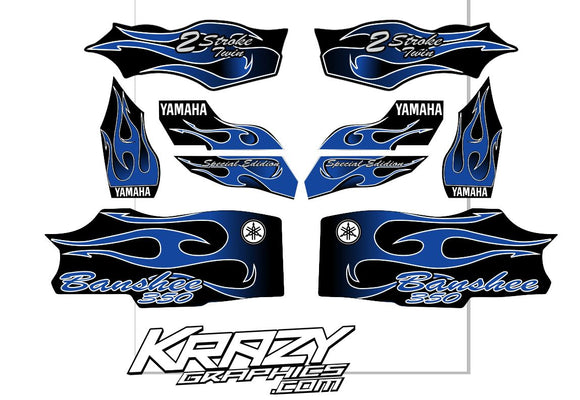
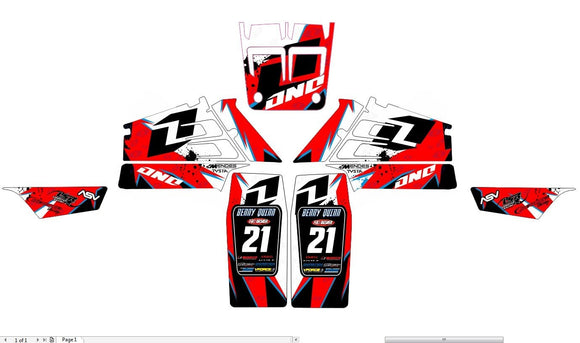
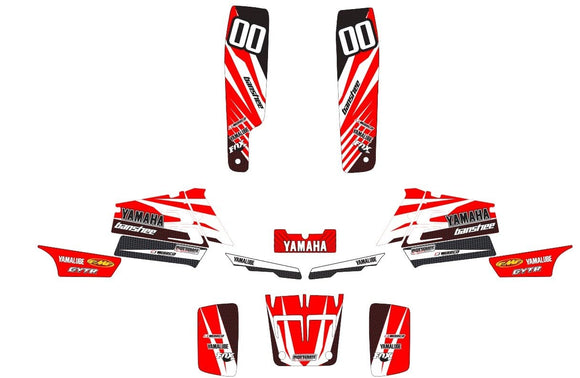
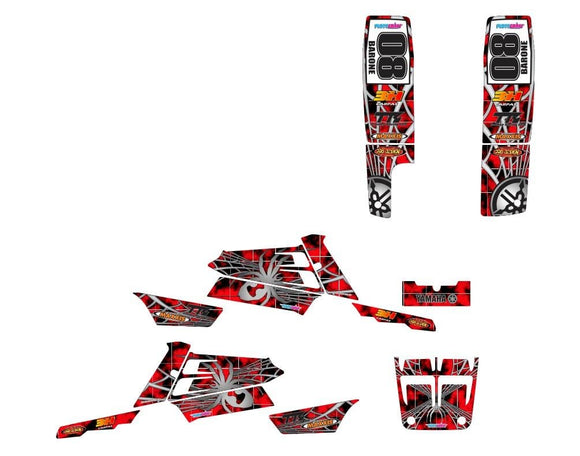
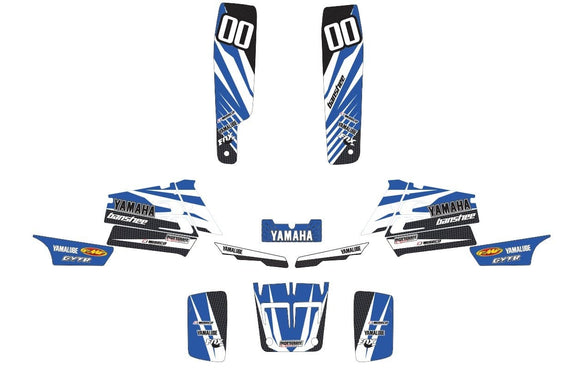
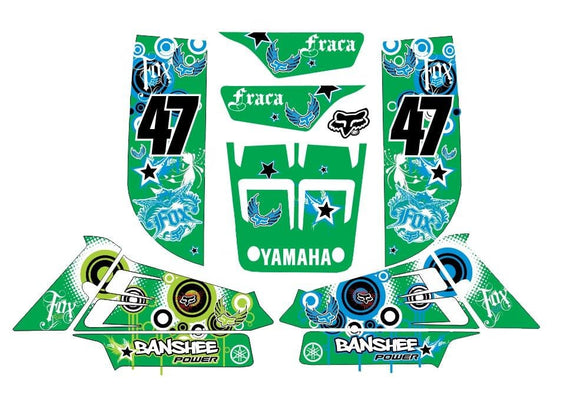
Yamaha Banshee 350 Graphics
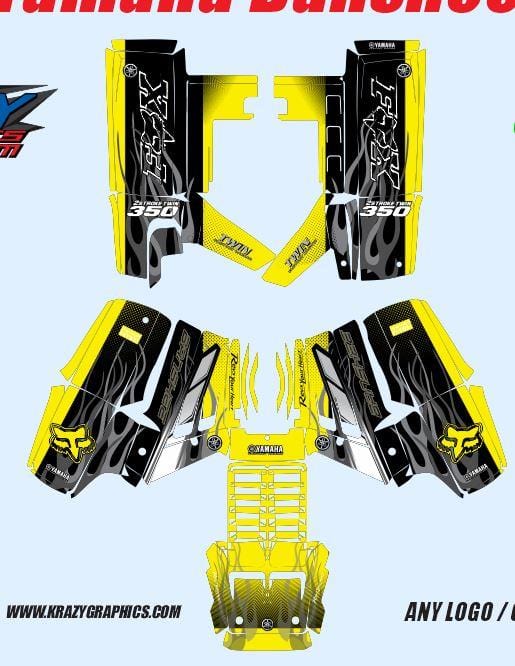
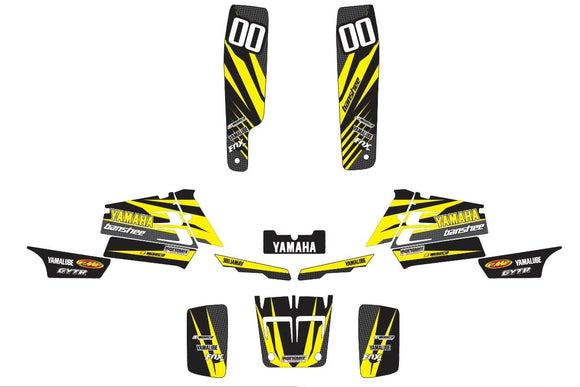
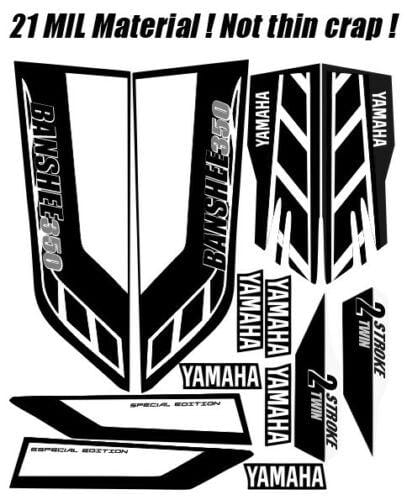
Banshee 350 Graphics Kit YFZ350 / 1987 – 2006
Built For The Legend
The Banshee earned its name the hard way — twin-cylinder two-stroke fury and a body that's been the canvas for three decades of custom builds. This Yamaha Banshee 350 graphics kit is cut for riders who want their quad to look as committed as it rides.
Refresh tired factory decals, finish a ground-up restoration, or put the last touch on a drag or dunes build — this kit gives the machine the presence it deserves.
Designed around the YFZ350 plastic profile.
Sharp lines and bold contrast that match Banshee attitude.
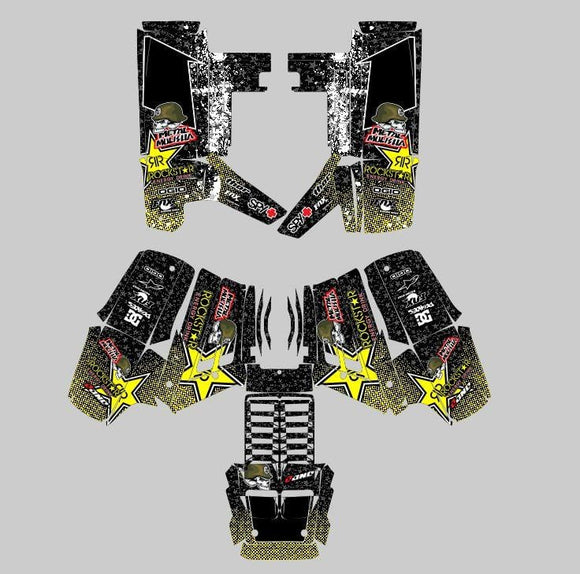
Names, numbers, color swaps welcome.
What You Get
- Front fenders✓
- Rear fenders✓
- Tank / shrouds✓
- Airbox covers✓
- Swingarm decals✓
- Number platesOptional
- Fits1987–2006
The Vault — Full Story
Why The Banshee Still Matters
The Yamaha Banshee 350 is one of the most iconic sport ATVs ever produced, and that legendary status is exactly why riders keep searching for custom Yamaha Banshee graphics decades after the machine left dealer floors. Built from 1987 to 2006, the YFZ350 ran a parallel-twin two-stroke engine that pulled hard, revved harder, and made a sound nothing else in the sport-quad world could match. Even now, the Banshee still has a stronger custom following than most modern quads. The reason is simple. It has personality. The body shape, the powerband, the riding feel, and the entire culture around it all combine into something riders genuinely want to keep alive.
That loyalty matters when it comes to graphics. A machine with that kind of identity deserves a finish that respects it. Generic stickers won't do. The Banshee has earned model-specific styling, and that's exactly what serious riders are looking for when they shop for a graphics kit. They're not trying to slap something on the side. They're trying to finish a build they care about.
What Graphics Actually Do For A Build
Graphics are one of the fastest ways to completely transform a Banshee without fabrication, paint, or major bodywork. A fresh decal kit takes faded plastics and tired stock finishes and turns them into something that looks cleaner, bolder, and far more customized. For a fraction of what a full repaint costs, a quality graphics kit can change the entire visual identity of the machine. Lines look sharper. Color blocks read clearer. The plastics feel new again, even when they're not. That's the kind of payoff that makes graphics one of the highest-value upgrades in the entire customization process.
That's the difference between dressing up a quad and finishing it. A finished Banshee feels intentional from every angle. The graphics tie the build together, give the eye something to track across the panels, and turn what used to be flat plastic into a coordinated visual statement. Riders shopping for Yamaha Banshee decals, Banshee 350 graphics kits, or custom ATV wraps usually aren't looking for a small change. They want impact. They want the quad to look as fast as it rides. A properly designed graphics setup delivers exactly that, and it does it without weeks of downtime in a paint booth.
The Build Types This Kit Fits
The Banshee platform is one of the most customized sport quads in the scene, and the build directions are all over the map. Dunes riders push them at Glamis, Silver Lake, and Little Sahara with paddle tires, pipes, and big-bore kits. Drag racers strip them down, port them out, and chase quarter-mile times with stretched swingarms and lock-up clutches. Trail riders keep them closer to stock and run them hard through the woods, where the two-stroke pull through tight sections is hard to match. Show builders restore them frame-up with chrome, polished cases, and matching plastics. And plenty of riders just love the legacy and keep one running because nothing else feels the same on the throttle.
In every one of those builds, the way the machine looks matters as much as how it runs. A custom graphics kit gives the rider control over that identity with bold color, aggressive detail, and a layout shaped to fit the build direction. Dunes builds get bright, high-visibility designs that pop against sand. Drag builds get sharper, faster-looking layouts that match the purpose-built nature of the quad. Restoration builds get clean, period-correct or modernized graphics that finish the project the way it was meant to be finished. The right kit isn't generic. It speaks to the build.
Refresh, Restore, Rebuild
A huge reason a fresh Banshee graphics kit matters is that it makes older plastics feel new again. Many Banshees out there have been ridden hard, modified repeatedly, or passed through multiple owners over the years. The motor might run strong, but the cosmetics tell a different story. Scratched panels, peeling decals, sun-faded color, and mismatched aftermarket parts all chip away at the full effect of the build. Even a strong-running quad can look tired if the visuals haven't been touched in years, and that visual tiredness affects how the build reads to everyone who sees it.
A clean graphics package fixes that without forcing a full cosmetic overhaul. New plastics are expensive and not always necessary. New paint is even more expensive and adds time and labor most riders don't want to deal with. A graphics kit gives most of the visual payoff at a fraction of the cost and effort. The plastics themselves can stay. The kit refreshes them. That's why graphics tend to be one of the highest-impact, lowest-cost upgrades in the entire customization process. It's also why so many Banshee owners end up running through multiple kits over the life of the quad. Every kit is a chance to evolve the look.
Why Model-Specific Cuts Matter
One thing that separates a real graphics kit from a generic decal pack is the cut. The Banshee has a specific plastic profile. The front fenders flare a certain way, the tank shrouds wrap with a specific curve, the airbox covers sit at a particular angle, and the rear fenders have their own contour that nothing else on the market shares. A quality kit is designed around those exact shapes so the graphics lay flat, follow the lines, and finish at the edges the way they should. A generic kit fights the plastics. A Banshee-specific kit completes them.
That's why search behavior shows riders actively looking for model-specific styling rather than universal stickers. Phrases like Yamaha Banshee 350 graphics, Banshee custom decals, race quad wrap kit, Yamaha Banshee plastics graphics, and custom two-stroke ATV graphics all point to riders who already know what machine they have and are looking for something built for it. They want a graphics kit that knows the Banshee. That's exactly what a model-specific cut delivers, and that's exactly why this kit is shaped the way it is.
The Visual Side Of A Build
When people see a Banshee with strong custom graphics, they notice it immediately. The machine looks cleaner, more aggressive, and more dialed in. That matters at meets, at the dunes, on trailers, in photos, on social media, and in the garage. The visual side of a build becomes part of the machine's reputation, and on a legendary platform like the Yamaha Banshee, that visual impact lands harder than it does on most other quads. Riders who own Banshees tend to take them seriously. The graphics should match that energy and respect what the platform represents.
There's also the personal side of it. A custom graphics kit is one of the few upgrades that's truly yours. Two riders can have the exact same engine build, the same suspension, the same wheels, the same pipes — but graphics are where the build actually becomes personal. Names, numbers, colors, layouts, and styling choices all reflect the rider behind the bars. That's part of why the right graphics kit matters so much. It's not a decoration. It's a signature on the build.
Standing Out At The Dunes And On The Strip
Visibility matters more than people sometimes realize. At the dunes, the right graphics kit isn't just about looking good — it's about being seen. Bright colors and sharp contrast help the quad stand out across long sight lines and in mixed light. On the drag strip, graphics signal intent. A purpose-built drag quad reads differently when the bodywork is dialed in, and judges, photographers, and other racers all pick up on that. At shows and meets, graphics are often the first thing the crowd sees before they ever hear the motor or look at the build sheet. The visuals set the tone.
That same visibility carries over into photos and video. In an era where most build documentation lives on phones and social feeds, the way a quad photographs matters. Clean graphics with strong contrast read well in every kind of light, from harsh sun at midday to overcast garage shoots. Riders who post their builds end up with content that actually represents the work they put in, and the graphics are a huge part of why those photos hit.
The Two-Stroke Culture Behind The Build
Part of what makes the Banshee scene different is the culture around two-stroke power. Two-strokes don't behave like four-strokes. They hit harder in the powerband, they sound completely different, and they require a relationship between rider and machine that fewer and fewer modern quads even attempt. The Banshee was the last major production sport quad to run a parallel-twin two-stroke, and that combination is part of why riders hold onto these machines decades after production ended. There's nothing else like it on the trail or in the dunes. The quad has its own voice, and once a rider has lived with it for a season, most don't want to go back to anything else.
That cultural weight is why graphics on a Banshee feel different from graphics on other ATVs. When a rider invests in a custom kit for a Banshee, they're not just decorating a quad. They're contributing to a build tradition that goes back generations of owners. The kit becomes part of how that specific machine reads to the rest of the scene. Other Banshee owners notice. Photographers notice. Builders notice. The graphics aren't just visuals on plastic. They're a statement about how seriously the owner takes the platform.
Pairing Graphics With The Rest Of The Build
A graphics kit doesn't live in isolation. It works with everything else on the quad — wheels, tires, exhaust, seat cover, bar pads, grips, frame finish, and motor work. The best builds are the ones where every piece supports the others, and a strong graphics layout is what ties those choices together. Aftermarket wheels look better on a quad with finished plastics. A polished chassis hits harder with clean graphics on top of it. Even something as simple as a new seat cover lands differently when the bodywork around it has been refreshed.
That coordination is part of why riders tend to plan graphics around the rest of the build rather than treating them as an afterthought. Color choices line up with the wheels. Layouts complement the seat. Number plate styles match the riding discipline. It's not paint-by-numbers — it's build planning. And on a Banshee, where the platform itself already carries so much identity, the graphics are usually the moment the build clicks together. Before the kit goes on, the quad looks like a project in progress. After the kit goes on, it looks like a finished machine.
Longevity And Riding Conditions
Banshees see hard environments. Sand, mud, water, sun, salt, wind, and the constant abrasion of riding gear against the bodywork all take a toll on plastics and decals over time. That's why riders pay attention to how a graphics kit holds up, not just how it looks on day one. A kit that looks great fresh but starts peeling after a few rides isn't doing the build any favors. The point is to give the quad a finished look that lasts through real riding, not a showroom finish that falls apart the first time the machine sees actual conditions.
That's why durability and build quality matter as much as design when riders shop for a graphics kit. The visuals are what catch the eye first, but the construction is what determines whether the kit is still there two seasons later. A serious Banshee owner isn't looking for a one-ride sticker pack. They're looking for something that respects how hard these machines get ridden and stays looking sharp through it. That mindset is part of what separates a real custom kit from a generic decal set.
Bringing It All Together
Every Banshee build tells a story. Some are stories about chasing speed. Some are about preserving a piece of two-stroke history. Some are about finishing a project that started years ago and finally getting it across the line. A custom graphics kit is one of the most direct ways a rider gets to tell that story on the machine itself. It's the most visible part of the build, the part that other people see first, and the part that ends up in every photo of the quad from that point forward. That's a lot of weight for a graphics kit to carry, and it's exactly why the choice matters.
When the kit is right, the build feels right. The quad reads the way the rider wants it to read. The plastics look like they belong on the machine instead of fighting it. The whole presentation comes together in a way that loose stock decals or random aftermarket stickers can never deliver. That's the difference a serious, model-specific Yamaha Banshee 350 graphics kit makes. It's not just a visual upgrade. It's the finishing piece on a platform that's earned every bit of attention it gets.
What Makes A Kit Worth Ordering
Not every graphics kit is worth the install. The ones that are tend to share a few things in common. They're cut for the actual machine instead of trimmed down from a generic template. They use color and contrast in ways that hold up across different lighting conditions, not just under shop lights. They give the rider room to personalize without forcing every kit to look identical. And they respect the platform they're designed for. On a Banshee, that last point matters more than most riders realize. The quad has earned a level of respect in the sport-quad community that goes beyond what newer machines get, and a graphics kit that ignores that legacy ends up looking out of place no matter how loud the colors are.
The kits that work are the ones that understand the Banshee already has visual identity baked into the platform. The shape of the tank shrouds, the angle of the headlight, the proportion of the rear fenders, the way the seat meets the airbox — all of that is part of what makes a Banshee look like a Banshee. A good graphics kit works with those elements instead of fighting them. It enhances what's already there. It draws the eye across the panels in a way that tracks with the machine's natural lines. That's what separates a kit that looks bolted-on from a kit that looks like it belongs.
The Bottom Line
If you're after Yamaha Banshee 350 graphics that deliver serious styling, model-specific fitment, and a strong custom presence, this is the kind of upgrade that makes the whole quad feel finished. Refresh an older machine. Restore a classic. Finish a drag build, a dunes build, a show quad, or just a Banshee you love riding. A custom graphics kit is one of the fastest ways to make any of those projects feel done, and on a platform with the legacy of the Banshee, finished is exactly what the machine deserves. The Banshee already has the personality. The right graphics kit just lets it show. Whether the build sees its first ride this weekend or sits in the garage waiting for the next season, the graphics are what make it feel ready. That's the upgrade. That's the payoff. That's why riders keep coming back to custom Banshee kits year after year, build after build, and generation after generation of two-stroke owners who refuse to let the platform fade.